修行,從真正感受到自己開始
Practice begins by truly feeling yourself
瑪南的修持不會只有一種形式。但無論形式如何,核心都回到覺知、觀察與修持。 這個方向來自噶奇美多傑仁波切,瑪瑟家族在瑪南的第三代, 2019 年由怙主直貢澈贊法王委任主持這個閉關園區。
Practice at Manang will not take only one form. Whatever its form, it returns to awareness, observation and practice. The direction comes from GarTul Chimi Dorjee Rinpoche, the third generation of the Mase family in Manang, appointed in 2019 by His Holiness the Drikung Chetsang Rinpoche to lead this retreat campus.
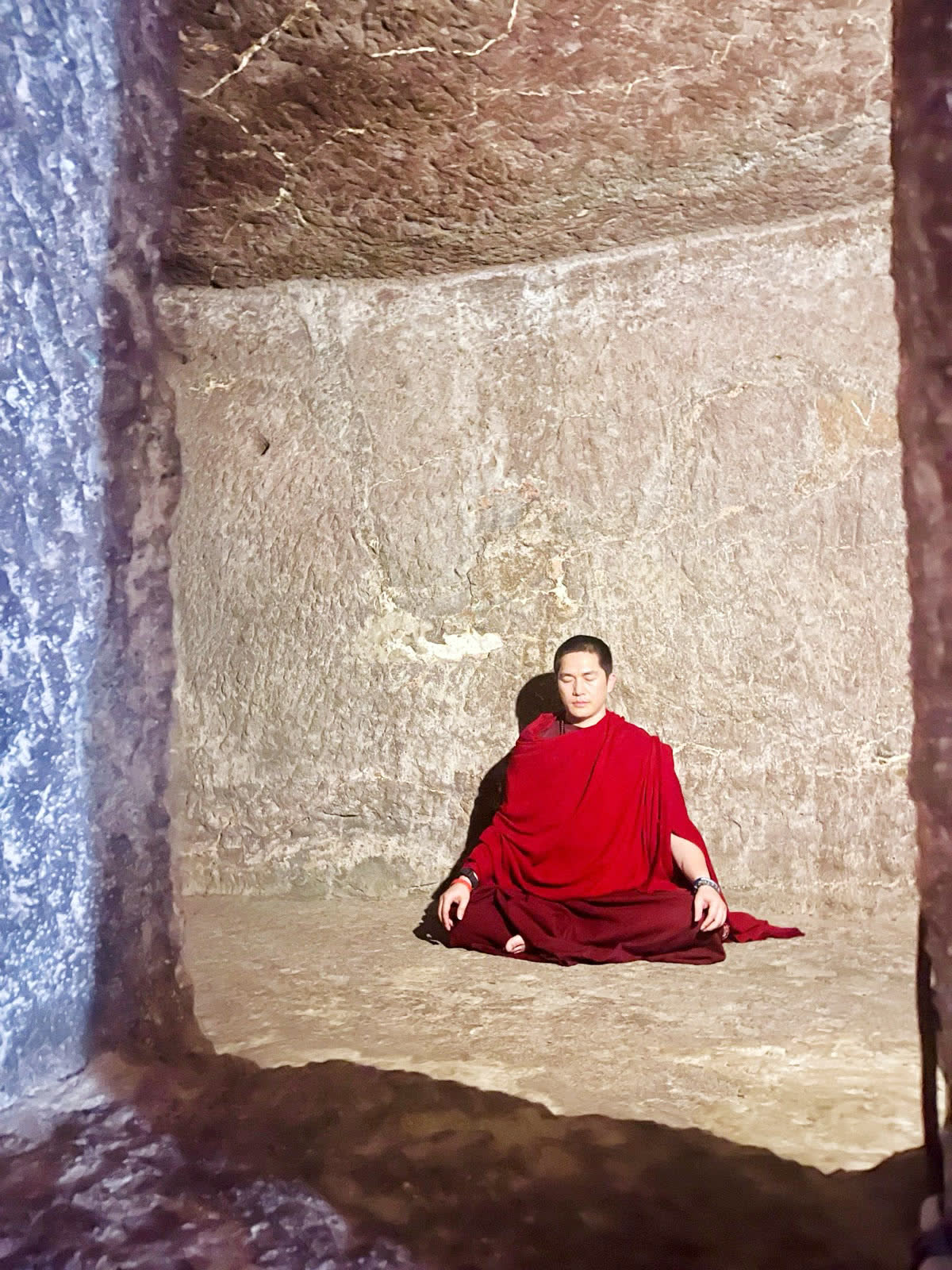
感受壓力與緊繃。不需要立刻改變什麼。先變得敏感。 仁波切談到一種很基本的放鬆:當壓力慢慢鬆開,人可以感到像氣球、棉花、羽毛一樣輕。 身體的敏感度,也成為更深修持的基礎。
Feel pressure and tension. First become sensitive. Rinpoche describes basic relaxation as becoming light like a balloon, cotton, or a feather as tension releases. Sensitivity of the body becomes a basis for deeper practice.
讀身體與覺知的完整故事 → Read the full Body & Awareness story →善意出現時,身體發生什麼?瞋恨出現時,又發生什麼?仁波切談到「替換」: 以善意替換欲望,以慈悲替換憤怒。智慧成為橋樑,幫助我們看見身體與情緒之間發生的事情。
What happens in the body when kindness arises? What happens when anger arises? Rinpoche speaks of replacing desire with kindness and anger with compassion. Intelligence becomes a bridge between body and emotion.
念頭來去。覺知留下。 Thoughts come and go. Awareness remains.
不是追著每一個念頭跑。在呼吸之間、念頭之間,甚至念頭之中, 仁波切指向那個一直都在的背景。 The point is not to chase each thought. Between breaths, between thoughts, and even within thought, Rinpoche points toward the background that is always present.
噶奇美多傑仁波切 GarTul Chimi Dorjee Rinpoche
真正的修行裡,見、修、果不能彼此分開。見地不是只存在於開始,修持過程不能離開它, 結果也不是另一件事。三者必須在同一條路上。
View, Practice and Fruition cannot be separated. The view is not only present at the beginning, the process cannot leave it, and the result is not a different thing. They remain aligned on one path.
個人短期閉關以十天為基本週期。十天後確認空間是否可用, 也確認閉關者身心狀況是否適合繼續,再決定是否進入下一個十天。 對象不以出家或在家區分,核心條件是真誠修行。
Personal retreats begin with a ten-day period. At each checkpoint, availability and the retreatant's condition are reviewed before another ten days are considered. The model is open to monastic and lay practitioners whose focus is sincere practice.
仁波切構想讓四季與四種修持方向相應:息 · 增 · 懷 · 誅。 第一階段從「息」開始。修持與季節、環境及元素的變化一起發生。
Rinpoche imagines four seasonal orientations: Pacifying · Increasing · Magnetizing · Subjugating. The first phase begins with Pacifying. Practice moves with the seasons, the environment and the elements.
仁波切曾請示直貢澈贊法王,希望瑪南建立的不是任意一座寺院,而是真正與修持核心相連的地方。 法王提出:金剛亥母殿。仁波切進一步把核心帶回拙火。對他而言,拙火是無上瑜伽續的重要根本, 也是那若六法的重要基礎。
Rinpoche asked His Holiness the Drikung Chetsang Rinpoche about building something in Manang directly connected with the essence of practice. His Holiness proposed: a Vajrayogini Temple. Rinpoche then brings the emphasis back to Tummo as a root practice connected with the Six Yogas.
讀為什麼是金剛亥母與拙火 → Read why Vajrayogini and Tummo →不要一直這裡碰一點、那裡學一點。仁波切以樹為比喻: 先把時間、能量與努力放在根。根長好了,枝葉與果實自然出現。 瑪南的長期方向,是創造一個能讓重要修持真正做深的地方。
Rinpoche uses the image of a tree: put time, energy and effort into the root. When the root grows strong, branches and fruit follow. Manang's long-term direction is to create conditions where something important can genuinely be practiced deeply.
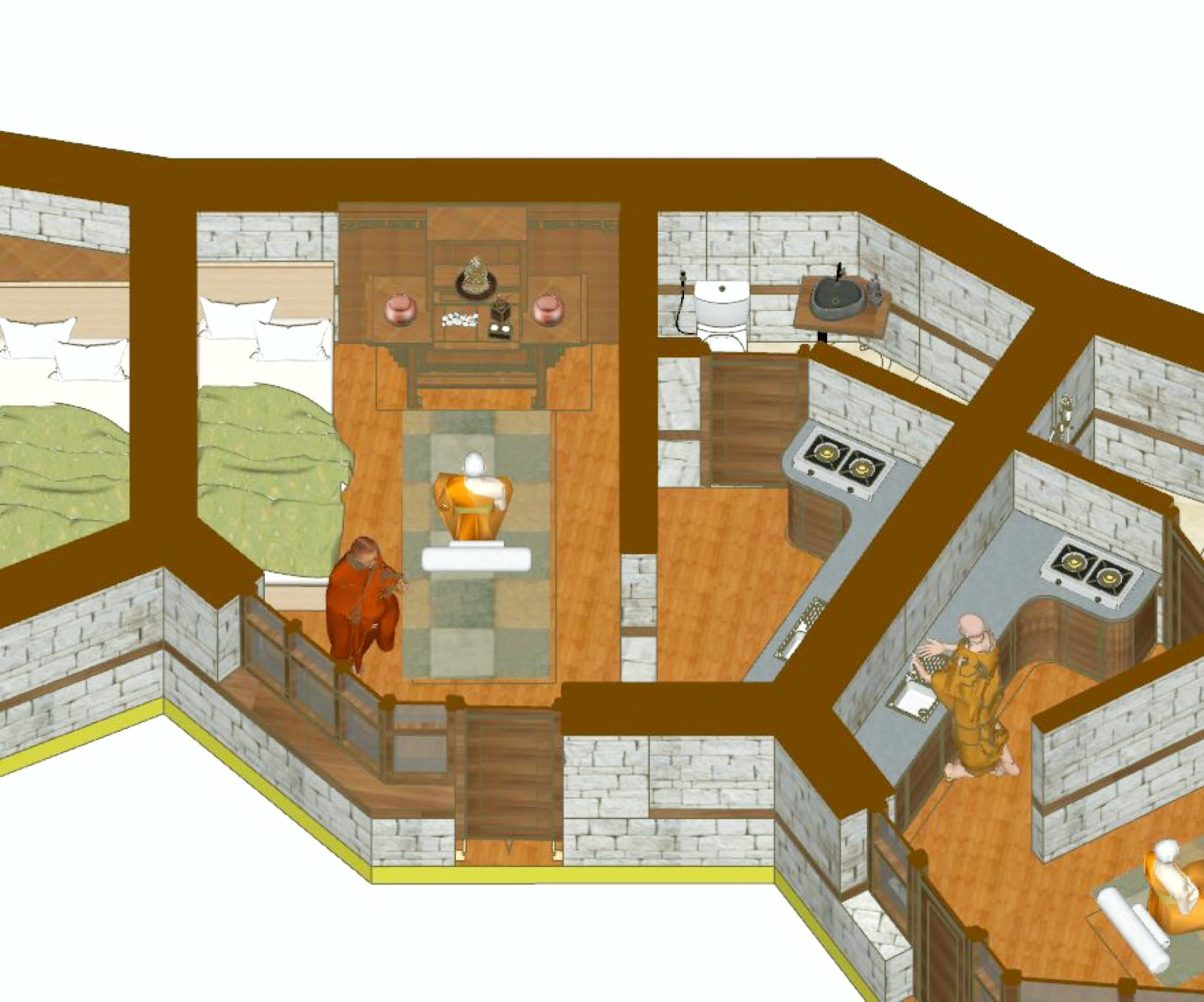
看看這些修持需要什麼樣的空間 See the spaces this practice requires