深度故事 · 修持Deep Story · Practice

先養根

Grow the root first

如果要建立一個修持的地方,什麼才是真正的核心?

If we are building a place for practice, what belongs at the root?

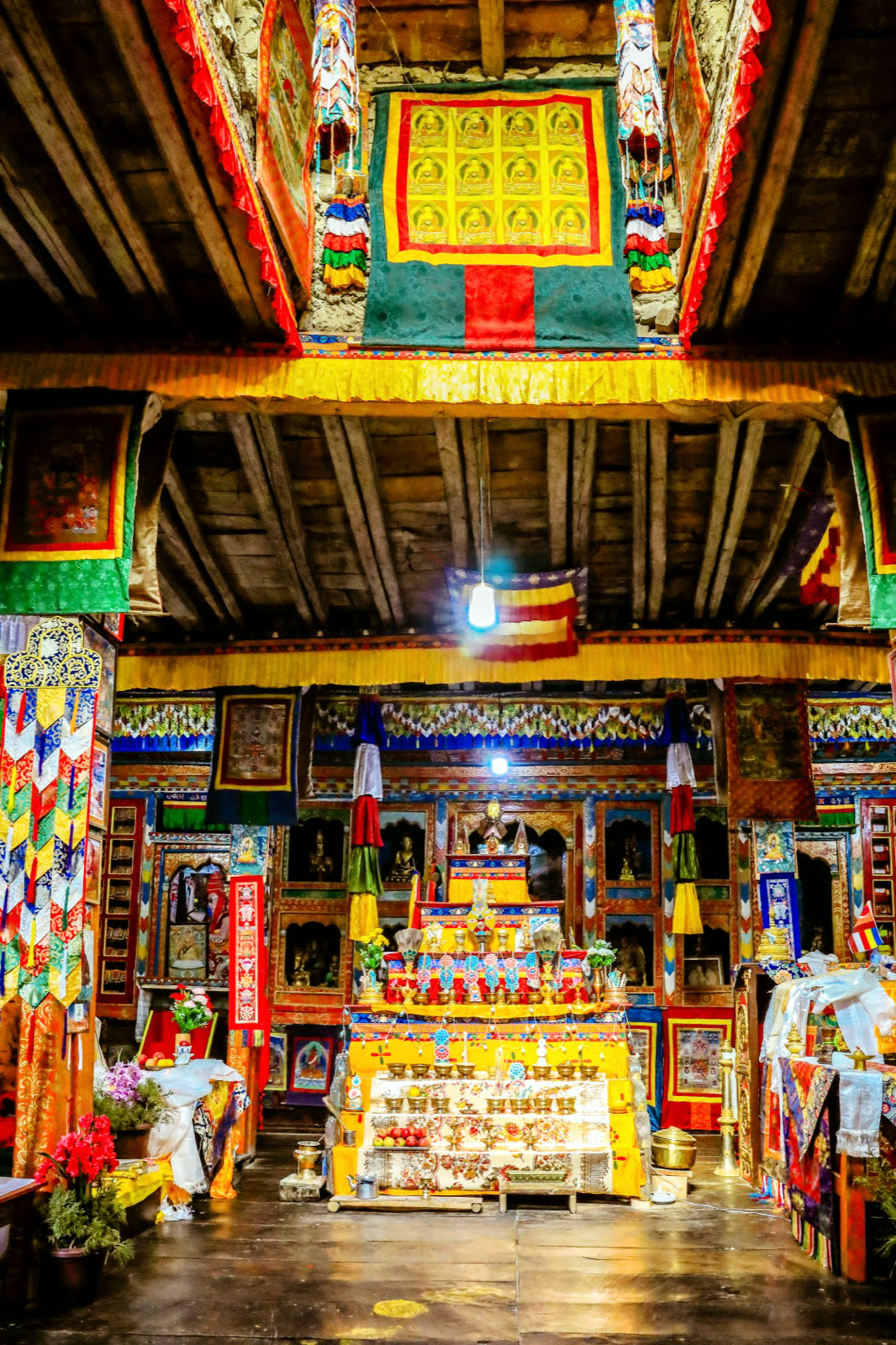
寺院大殿內部,柱列與唐卡

噶奇美多傑仁波切是瑪瑟家族在瑪南的第三代,2019 年由怙主直貢澈贊法王委任主持這個閉關園區。 他曾直接向直貢澈贊法王請示。

GarTul Chimi Dorjee Rinpoche, the third generation of the Mase family in Manang, was appointed in 2019 by His Holiness the Drikung Chetsang Rinpoche to lead this retreat campus. He brought this question directly to His Holiness.

他希望在瑪南建立的,不是一座隨機的寺院,也不是只增加一個宗教建築。他想知道:

He did not want to build a random monastery or simply add another religious building. He wanted to know:

對修持而言,什麼是真正重要的?

What is genuinely essential to practice?

法王回答:

His Holiness answered:

金剛亥母殿。

A Vajrayogini Temple.

我想建的,是真正有益於修持核心的道場。 I wanted to build something that genuinely serves the core of practice.

「上師建議:何不建一座金剛亥母殿?這是非常稀有的, 同時也是一切修持的根本所在。」 “My teacher suggested: why not a Vajrayogini temple? It is very rare, and it is the root of all practice.”

噶奇美多傑仁波切 GarTul Chimi Dorjee Rinpoche

為什麼是金剛亥母?

Why Vajrayogini?

仁波切指出,金剛亥母與那洛巴的修持傳承有非常深的連結。

Rinpoche points to Vajrayogini's deep connection with Naropa's practice lineage.

而當他繼續談到不同本尊與高階修持時,核心又回到拙火。

As he continues into higher practices and different deity forms, he repeatedly returns to Tummo.

在他的說法裡,拙火是無上瑜伽續非常重要的根本,也是那洛六法展開的重要基礎。

In his explanation, Tummo is a fundamental ground of Higher Yoga Tantra and an important basis from which the Six Yogas unfold.

這讓瑪南的長期方向變得很清楚:不是提供越來越多彼此分散的修法,而是建立一個能真正支持核心修持的地方。

This gives Manang a clear long-term direction: not an ever-growing collection of disconnected practices, but a place capable of supporting practice at the root.

第一世噶奇美多傑仁波切生於西藏囊謙,閉關修持那洛六法十三年。 1958 年在昌都被捕,死於獄中,往生時仍保持禪坐姿勢。那洛六法的核心是拙火, 拙火的修持以金剛亥母為本尊。

The first GarTul Chimi Dorjee Rinpoche was born in Nangchen and spent thirteen years in retreat on the Six Yogas of Naropa. He was arrested in Chamdo in 1958 and died in prison, still sitting upright in meditation posture. The Six Yogas turn on tummo, and tummo is practised with Vajrayogini.

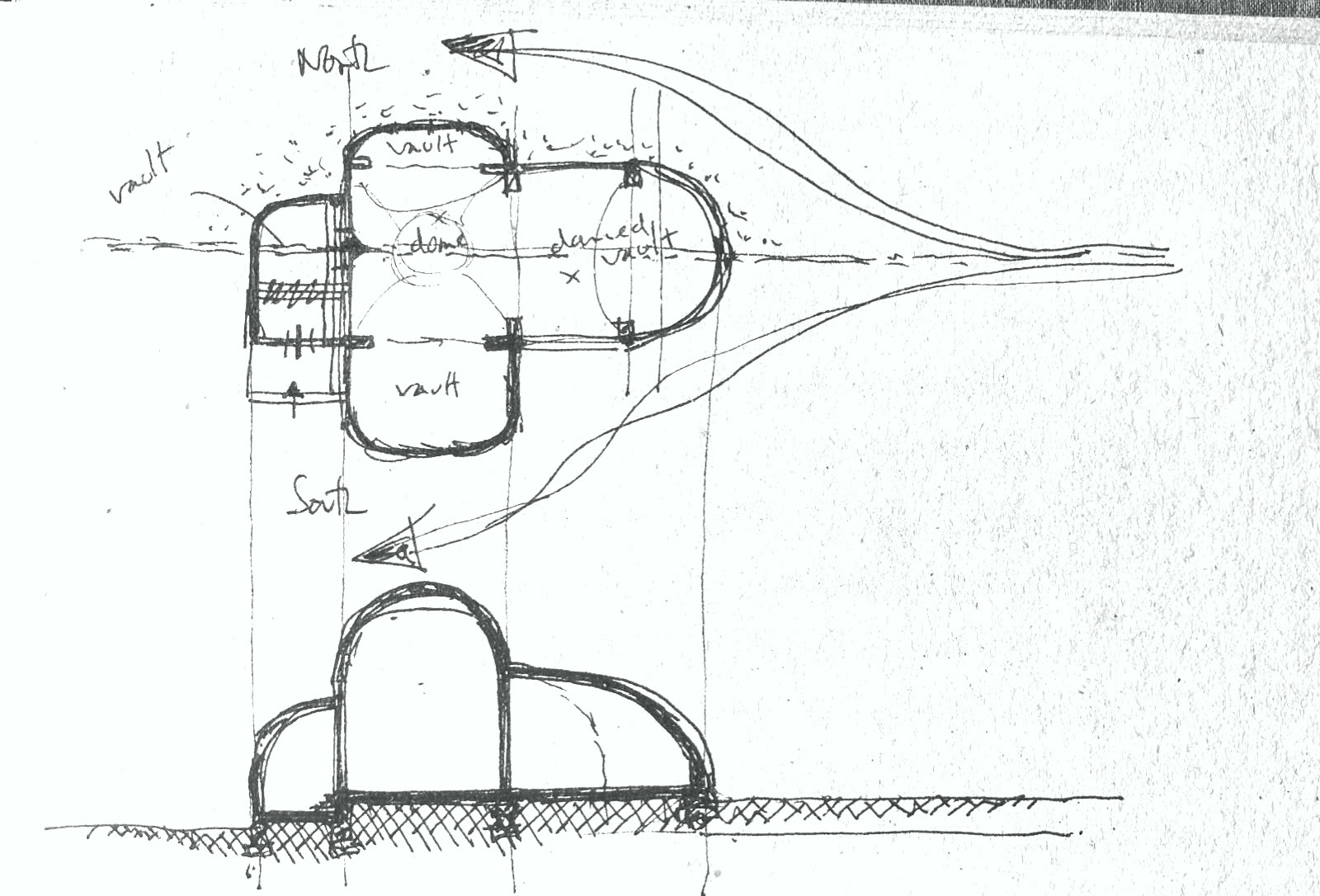
金剛亥母殿的手繪剖面草圖,標出拱頂與圓頂
SMA · 拱頂與圓頂,概念草圖 · Vaults and dome, concept sketch
金剛亥母殿的手繪平面草圖
SMA · 平面,概念草圖 · Plan, concept sketch

金剛亥母是藏傳佛教的女性本尊,代表智慧。 拙火是一套呼吸與專注的修法,在身體裡生起熱,以金剛亥母為本尊。 目前有概念設計與定案位置,但沒有預算,不在第一期的 US$607,000 之內。

Vajrayogini is a female figure in Tibetan Buddhism who stands for wisdom. Tummo, a practice of breath and concentration that generates heat in the body, is practised with her. There is a concept design and a fixed position, but no budget; it sits outside the US$607,000 of Phase I.

樹的比喻

The tree

仁波切用一棵樹來說明。現在的人很容易 cherry-picking。這裡碰一點。那裡學一點。一直追逐下一個想要的東西。

Rinpoche uses the image of a tree. It is easy to cherry-pick. Touch something here. Learn something there. Keep running after the next desired experience.

但如果真正把時間、能量與努力放在根上,等樹長大之後,枝葉與果實自然會出現。所以:

Instead, put time, energy, and effort into the root. When the tree grows, branches and fruit follow. So:

先養根。

Grow the root first.

高階修持需要品質

Advanced practice requires quality

仁波切並沒有把拙火描述成容易或適合被快速推廣的東西。相反地,他強調這需要真正有品質的工作。

Rinpoche does not describe Tummo as easy or something to promote casually. He emphasizes the quality of work required.

因此「深度先於規模」在這裡尤其重要。先建立成熟的修持。先建立真正能承載它的人。再建立適合它的空間與制度。

This is where Depth before Scale becomes especially important. First establish mature practice. Develop people capable of carrying it. Then create the spaces and structures that genuinely support it.

從金剛亥母殿回到整個瑪南

From the Vajrayogini Temple back to all of Manang

金剛亥母殿不是與其他建築分開的一個神聖物件。

The Vajrayogini Temple is not a sacred object disconnected from the rest of the project.

Grand Café 支持生活。閉關房支持個人修持。教學空間支持共同學習。而金剛亥母殿,則把整個地方重新連回修持的根。

The Grand Café supports daily life. Retreat houses support individual practice. Teaching space supports learning together. The Vajrayogini Temple connects the place back to the root of practice.

這些建築共同回答同一件事:

Together, these spaces answer one question:

如何讓一個人有條件真正修行?

What conditions allow a person to genuinely practice?

瑪南的願景因此不是「建得越多越好」。而是:

The Vision of Manang is therefore not to build as much as possible. It is:

讓真正重要的事情,有地方可以做深。

To give what truly matters a place to go deep.