如何讓願景在土地上一步步落地
Building the Vision into the land
瑪南的每一棟建築,都必須回答同一個問題:它如何支持人在這裡生活、修持與重新連結? 第一期由 SMA 完成設計與估價,主持人是噶奇美多傑仁波切,瑪瑟家族在瑪南的第三代, 2019 年由怙主直貢澈贊法王委任。設計費已付清,現在募的是工程款。
Every building at Manang must answer the same question: how does it support people in living, practicing and reconnecting here? Phase I is designed and costed by SMA. The project is led by GarTul Chimi Dorjee Rinpoche, the third generation of the Mase family in Manang, appointed in 2019 by His Holiness the Drikung Chetsang Rinpoche. The design fee is paid in full; what is being raised now is construction cost.
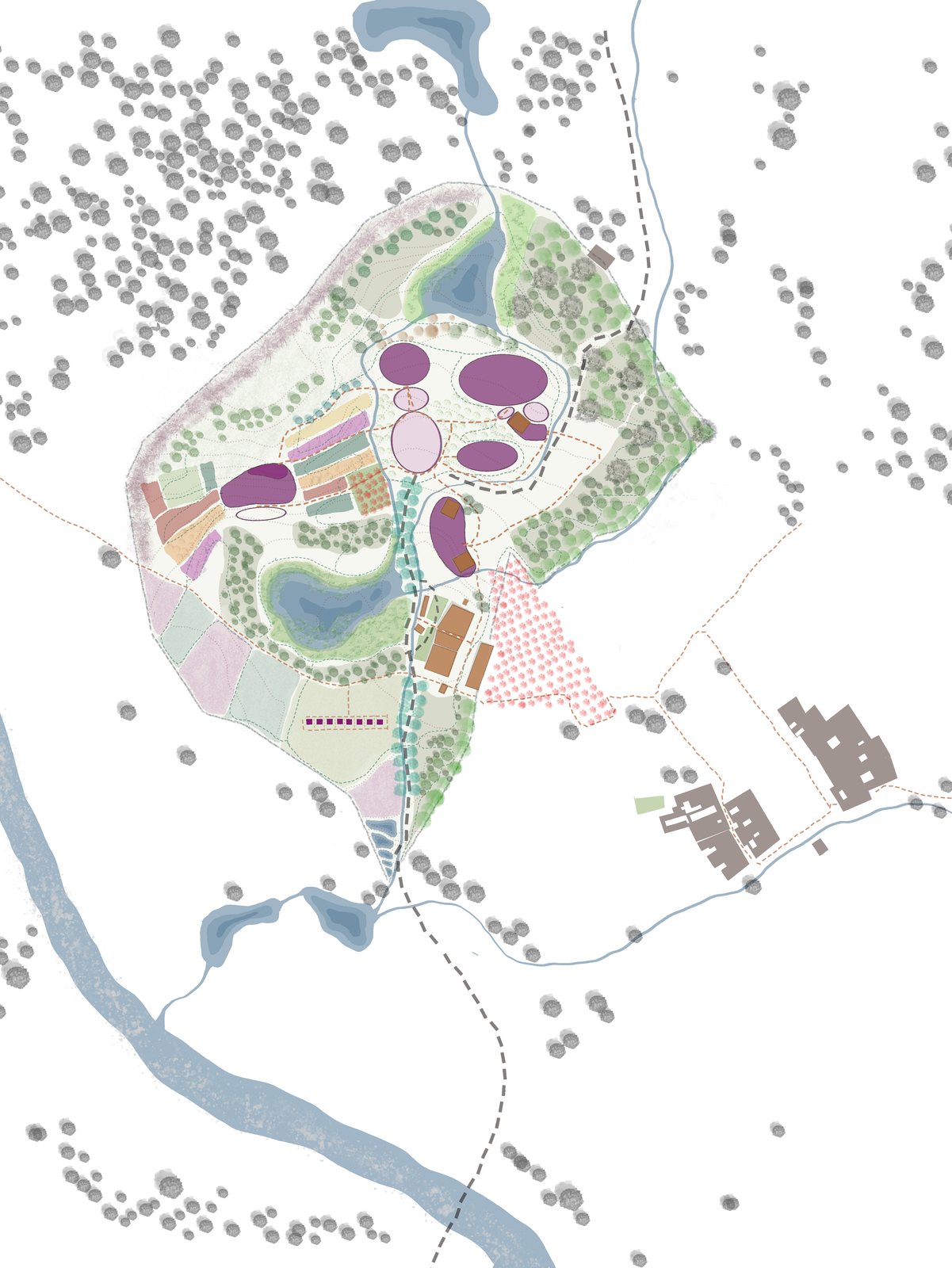
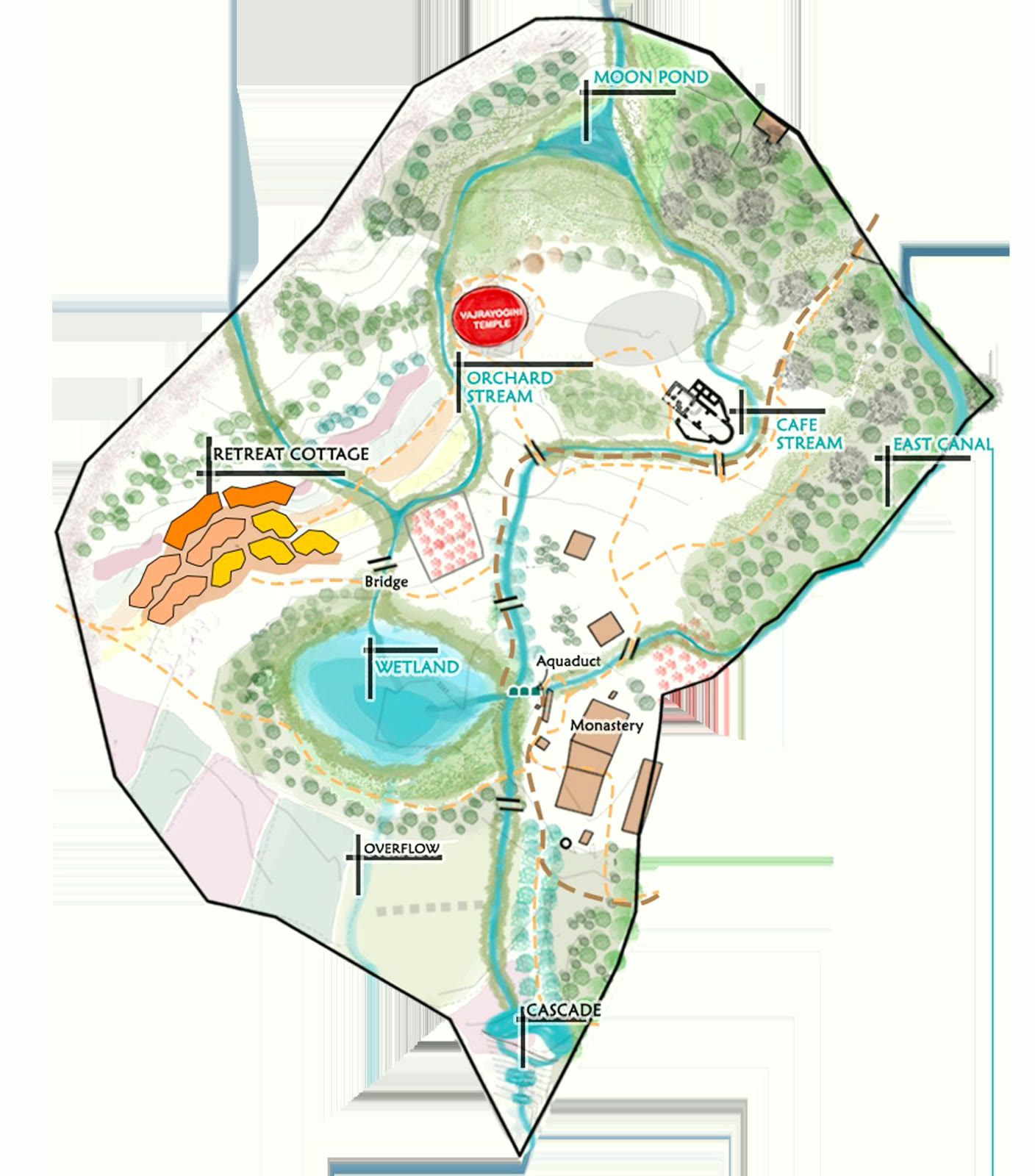
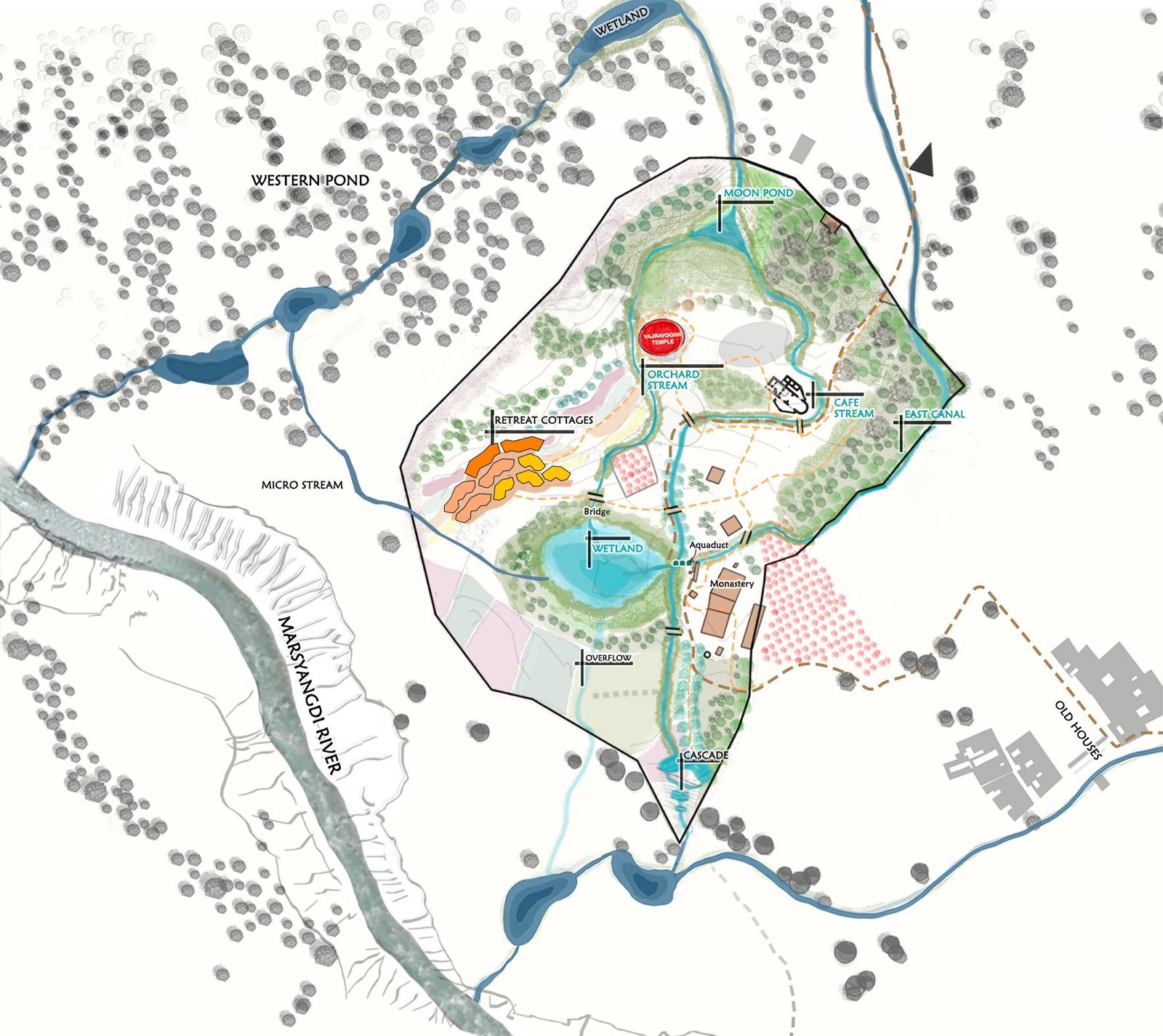
八項設施,現在動的是三項
Eight facilities. Three of them are moving now
| 設施Facility | 狀態Status |
|---|---|
| 21 間閉關石屋21 stone cottages | 第一期,有圖有估價Phase I, designed and costed |
| Grand Café | 第一期,有圖有估價Phase I, designed and costed |
| 水利與基礎設施Water and infrastructure | 第一期,有圖有估價Phase I, designed and costed |
| 金剛亥母殿Vajrayogini temple | 有概念設計與定案位置,尚無預算 Concept design and a fixed position, no budget yet |
| 法教與共修大殿Teaching hall | 構想階段At the idea stage |
| 老年閉關區Elders' retreat | 構想階段At the idea stage |
| 八塔Eight stupas | 構想階段At the idea stage |
| 山林步道與生態Landscape and paths | 部分含在第一期Partly inside Phase I |
US$607,000 是第一期的金額,不是整個園區的總價。 它只含 21 間閉關石屋、Grand Café 與水利及基礎設施。
US$607,000 is what Phase I costs, not the price of the whole campus. It covers the twenty-one stone cottages, the Grand Café, and water and infrastructure only.
第一個真正開始運作的瑪南
The first working piece of Manang
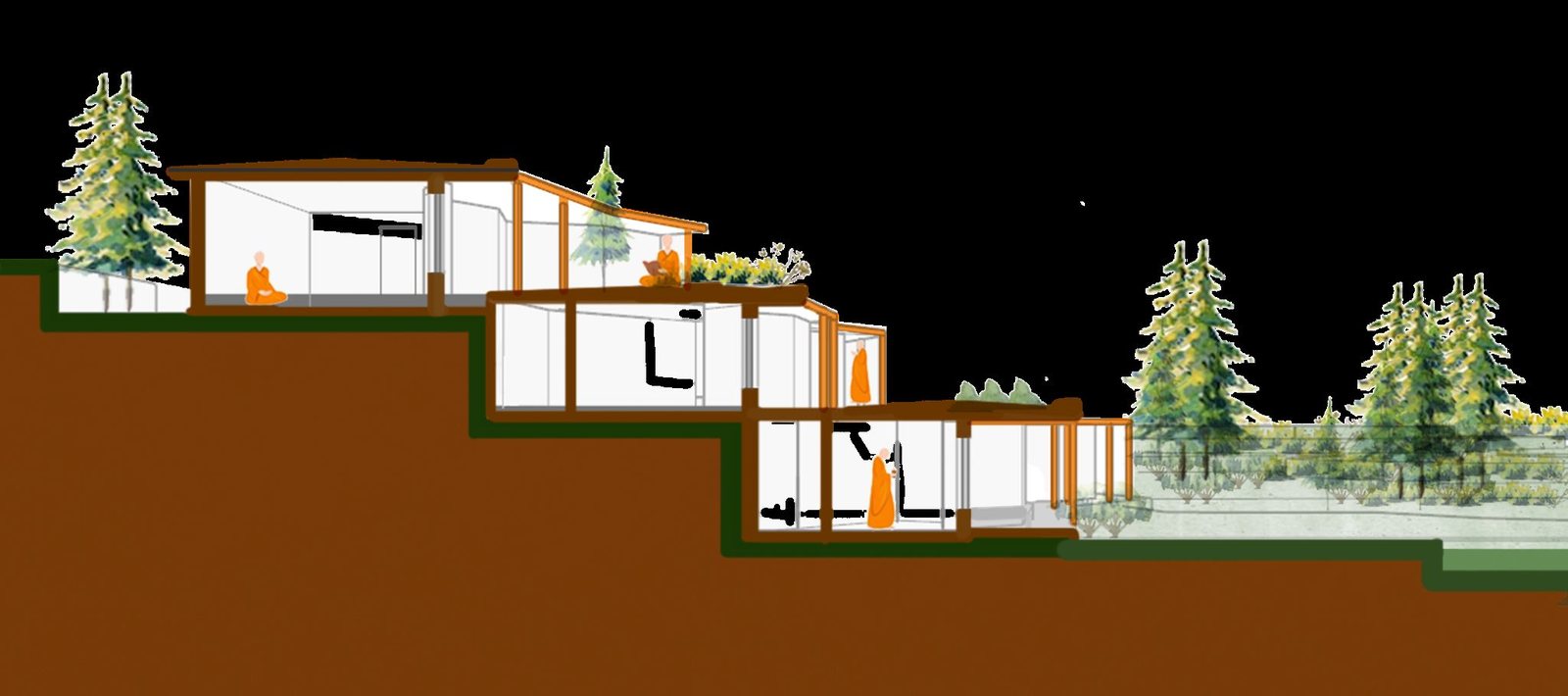
它不是整個計畫的目的。它是第一個規模適合、可以完成、可以驗證施工方式的示範建築。 現址已有一座閉關石屋,可活化與擴建。功能包括現代標準廚房、50 至 100 人團體教學與閉關的餐飲支援、 工作人員使用、社區交流、與外部道路連接的訪客接點,以及當地工班與施工管理的試點。
It is not the purpose of the whole project. It is a manageable pilot building that can be completed and used to establish the larger construction process. An existing retreat cottage can be reused and expanded. Functions include a modern kitchen, dining support for 50 to 100 person teaching and retreat groups, staff use, community exchange, a visitor touchpoint connected to the external road, and a pilot for local crews and construction management.
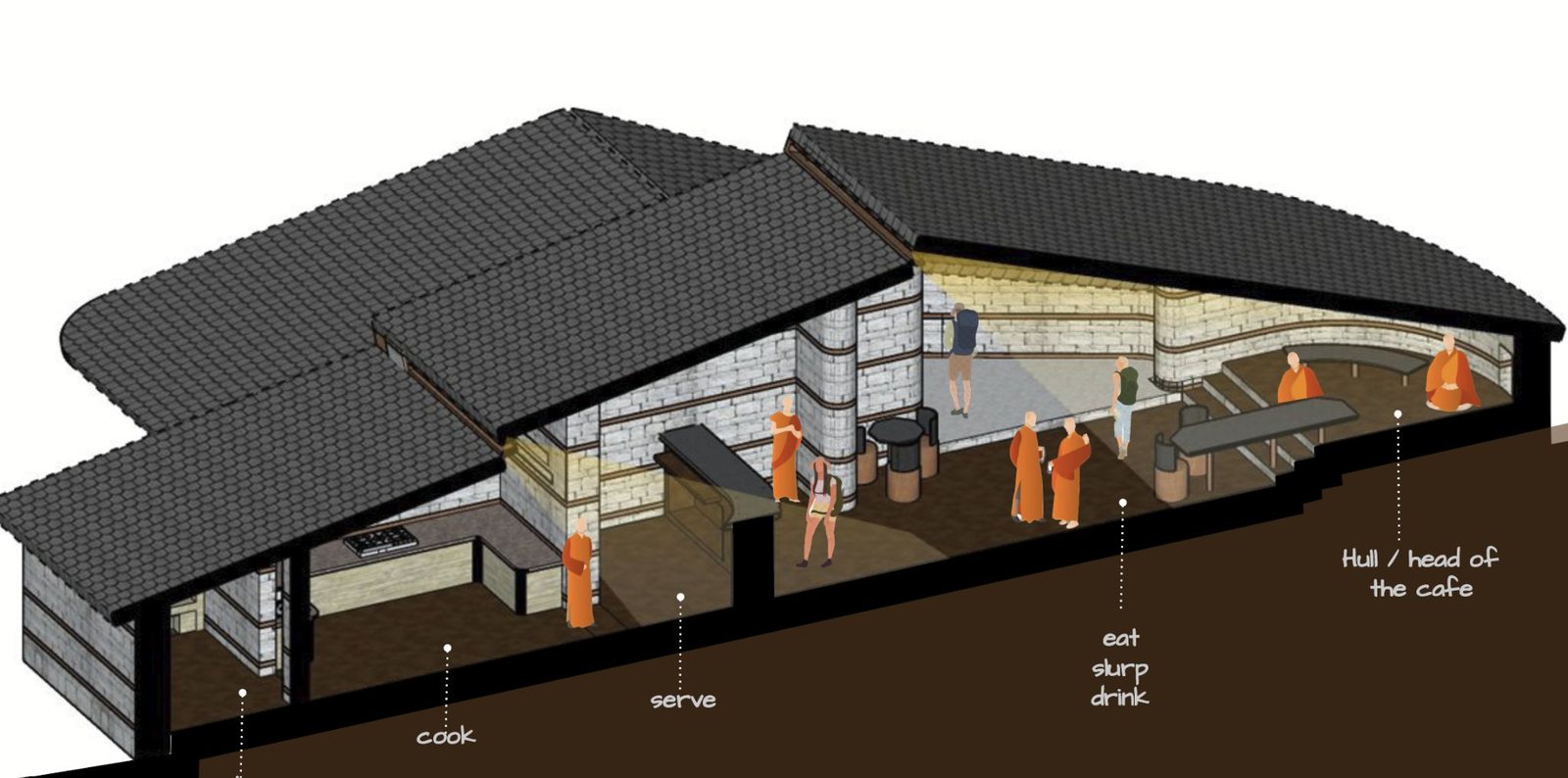
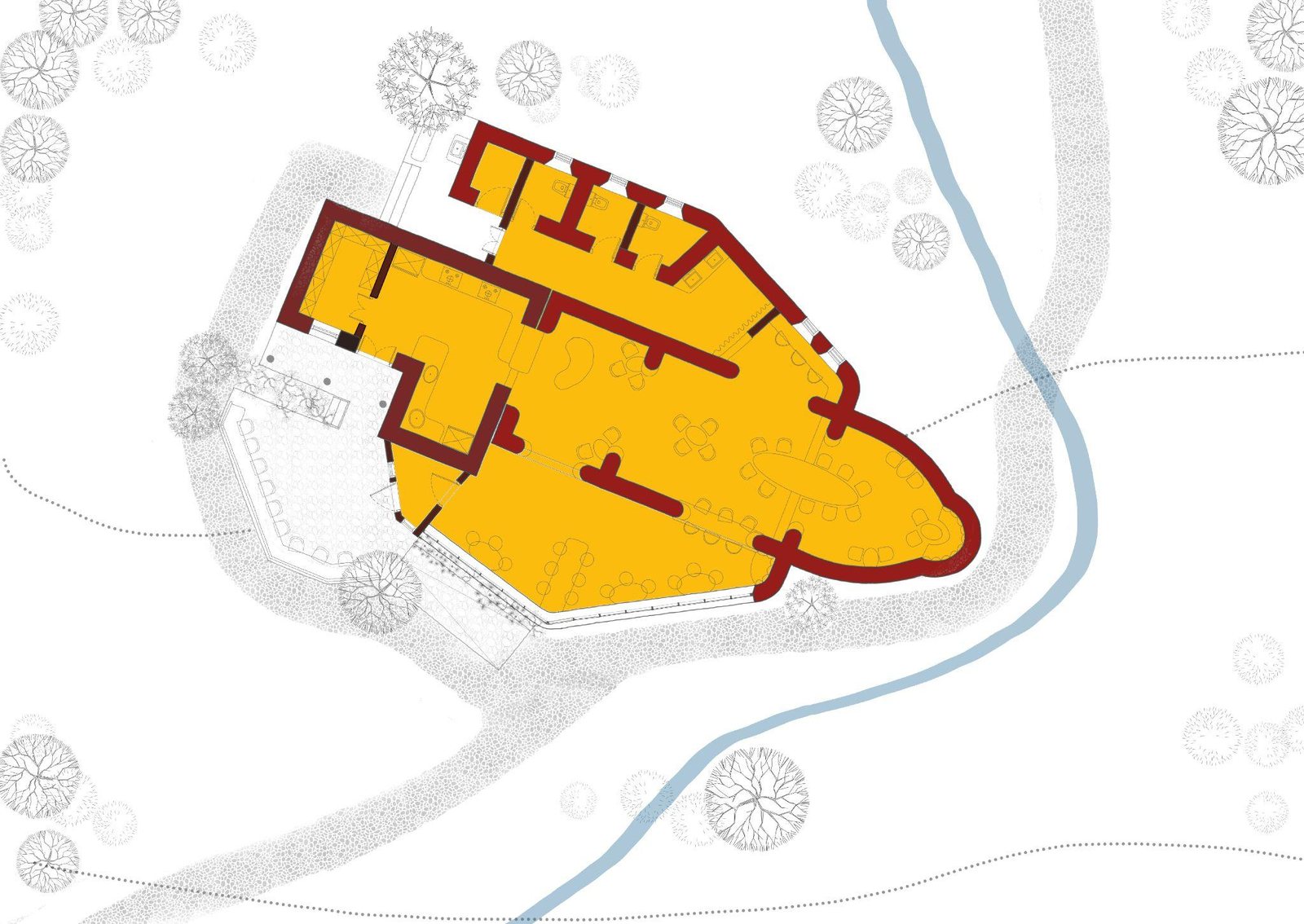
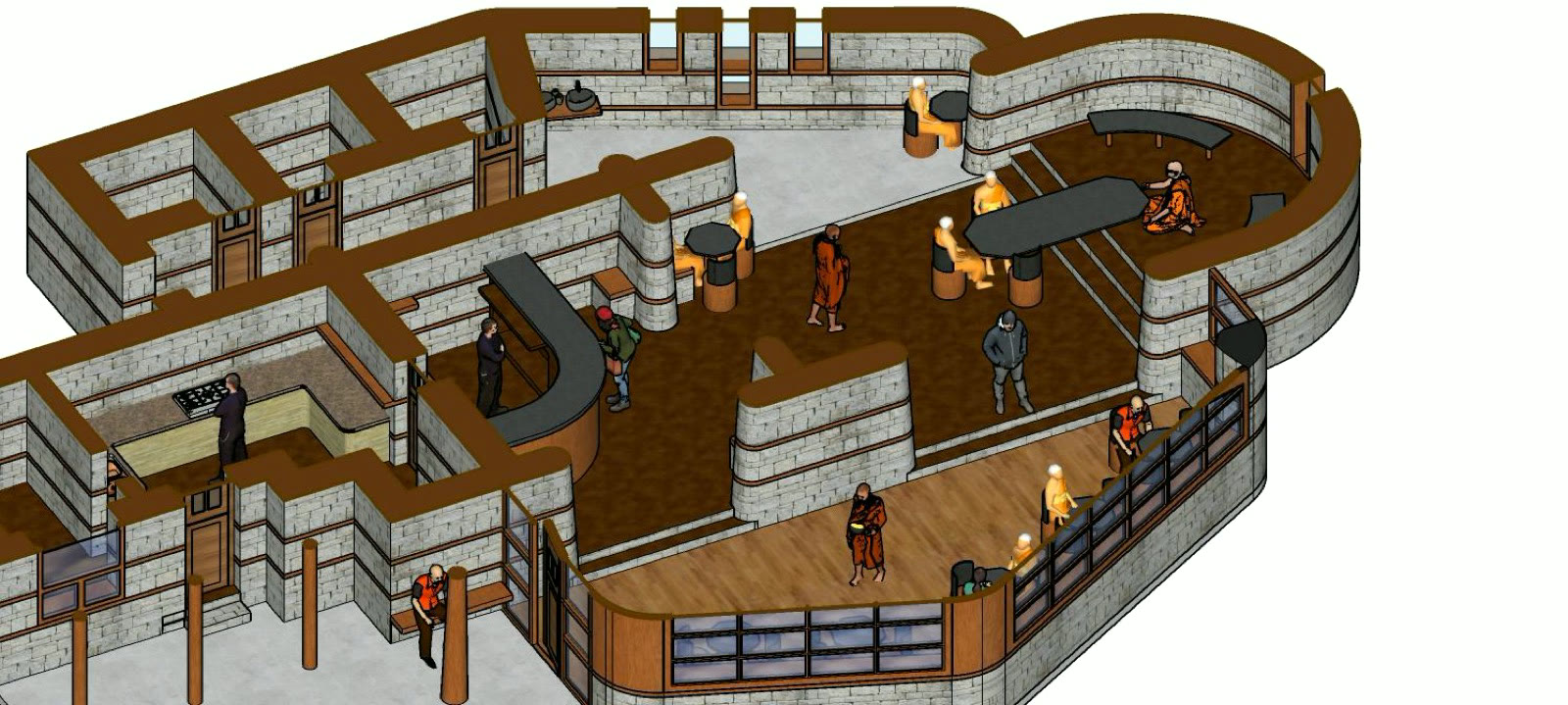
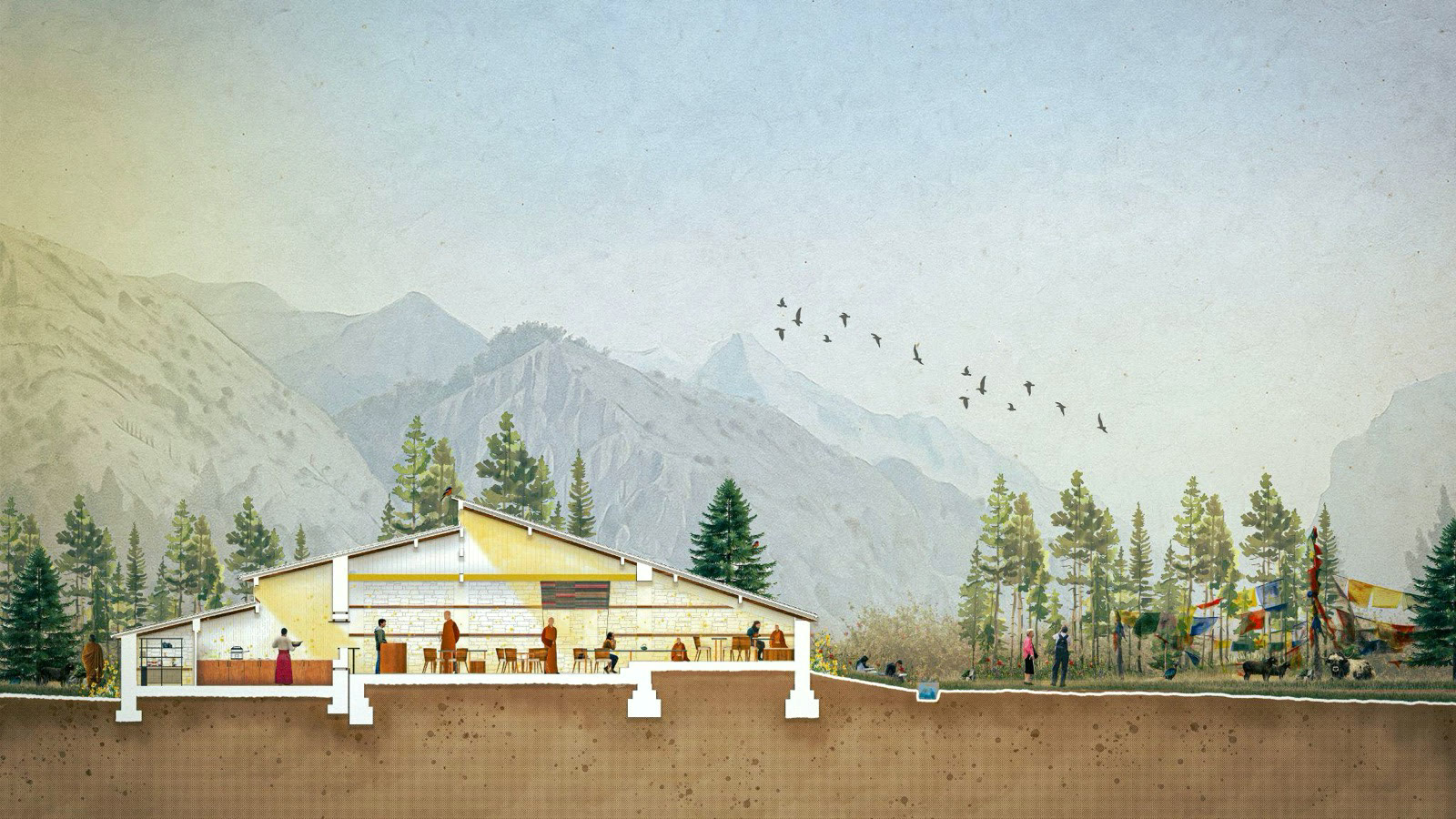
村裡沒有一個大家能一起坐下來的地方。 There is nowhere here for people to sit down together.
核心閉關區需要保持安靜,原則上不對一般訪客開放。 Grand Café 位在可以直接連接外部道路的位置,成為閉關園區與外界之間的一扇門。 安納普納環線每年帶人上山,Kyung 村目前沒有任何一個他們會停下來的地方, 那也是這棟房子將來的營運收入來源。 The core retreat area needs to stay quiet and is not generally open to visitors. The Grand Café sits where it can connect directly to the external road, becoming a door between the retreat campus and the world outside. The Annapurna circuit brings walkers up this valley every season and Kyung has nowhere for them to stop. That is where the building's future operating income comes from.
為長期閉關準備的房子
Built for long retreat
閉關不是短住。真正要坐下來的人,需要的是能夠獨自安住、不被打斷的條件: 視線不與人相接,作息不受人牽動,基本生活也不必為此中斷修持。
不同的修持有不同的需要。有人以持誦為主,有人修風脈,有人需要長時間的靜坐, 也有人依儀軌次第閉關數月乃至數年。獨立關房的意義,是讓這些不同的修法各自完整地進行, 不必彼此遷就,也不必向環境妥協。
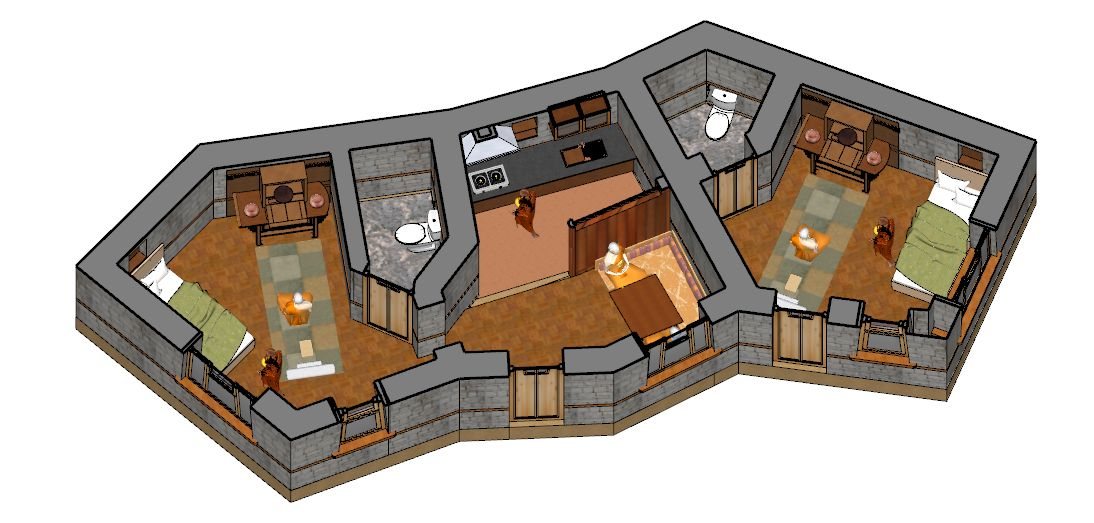
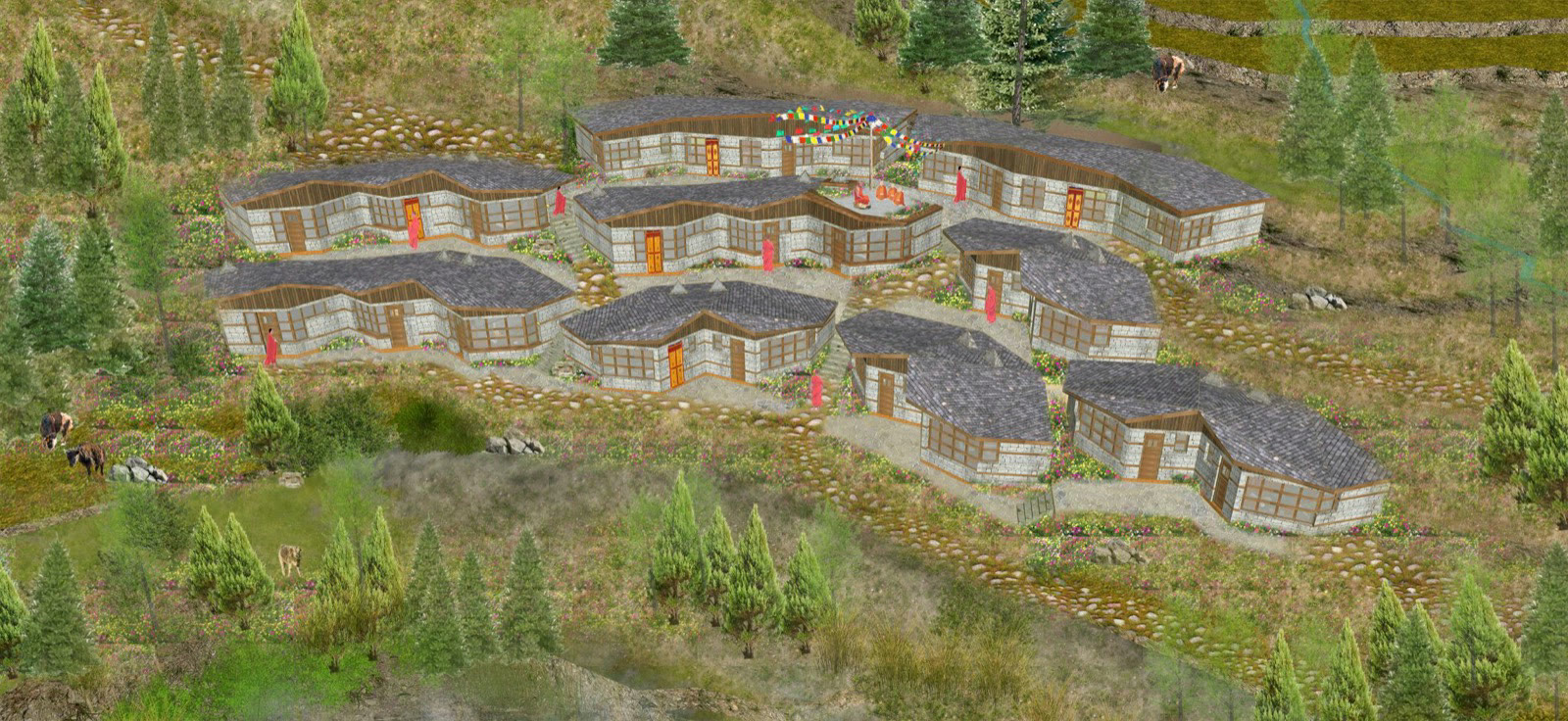
21 間沿等高線散開,彼此不相望。每間備有衛浴與簡易廚房。 第一批 4 至 5 間達到可施工規模,即可啟動下一組。
Retreat is not a short stay. Someone who genuinely sits down needs conditions that hold: no sightline into another's space, no one else's schedule pulling at theirs, and no need to break practice for the ordinary business of living.
Different practices ask for different things. One practitioner recites, another works with inner winds and channels, another needs long unbroken sitting, and another follows a sequence that runs for months or years. Separate cottages let each of these be carried through whole, without accommodating one another and without compromising to the site.
Twenty-one are spread along the contours; none overlooks another. Each has a bathroom and a simple kitchen. Once the first four or five reach a viable construction threshold, the next group can begin.
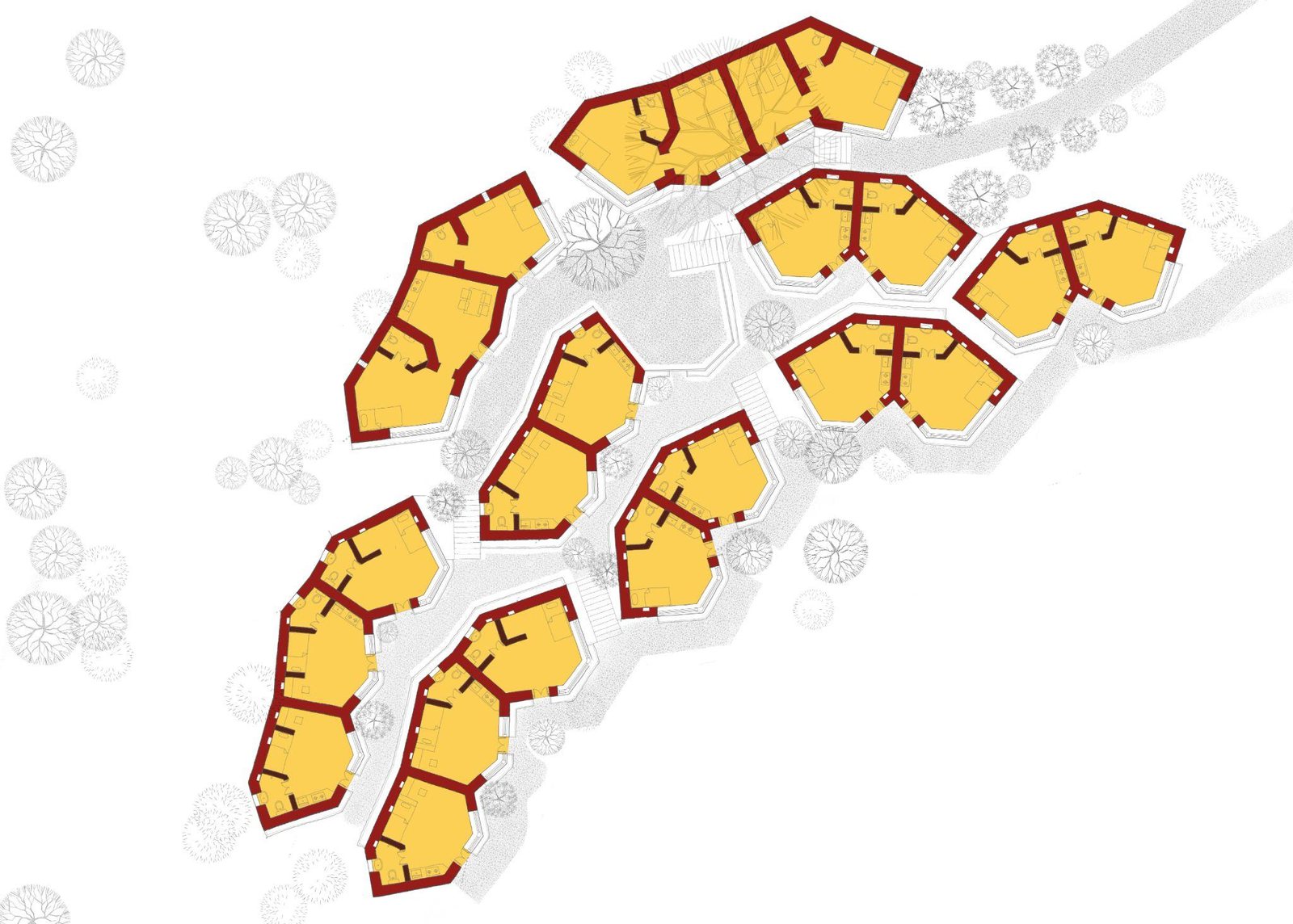
未來希望建立至少可容納約 50 至 100 人的教學與團體閉關空間,以及相應的團體住宿。 Grand Café 將成為這套團體設施的餐飲核心。
Future plans include teaching and group-retreat space for approximately 50 to 100 people, with corresponding group accommodation. The Grand Café will serve as the dining core.
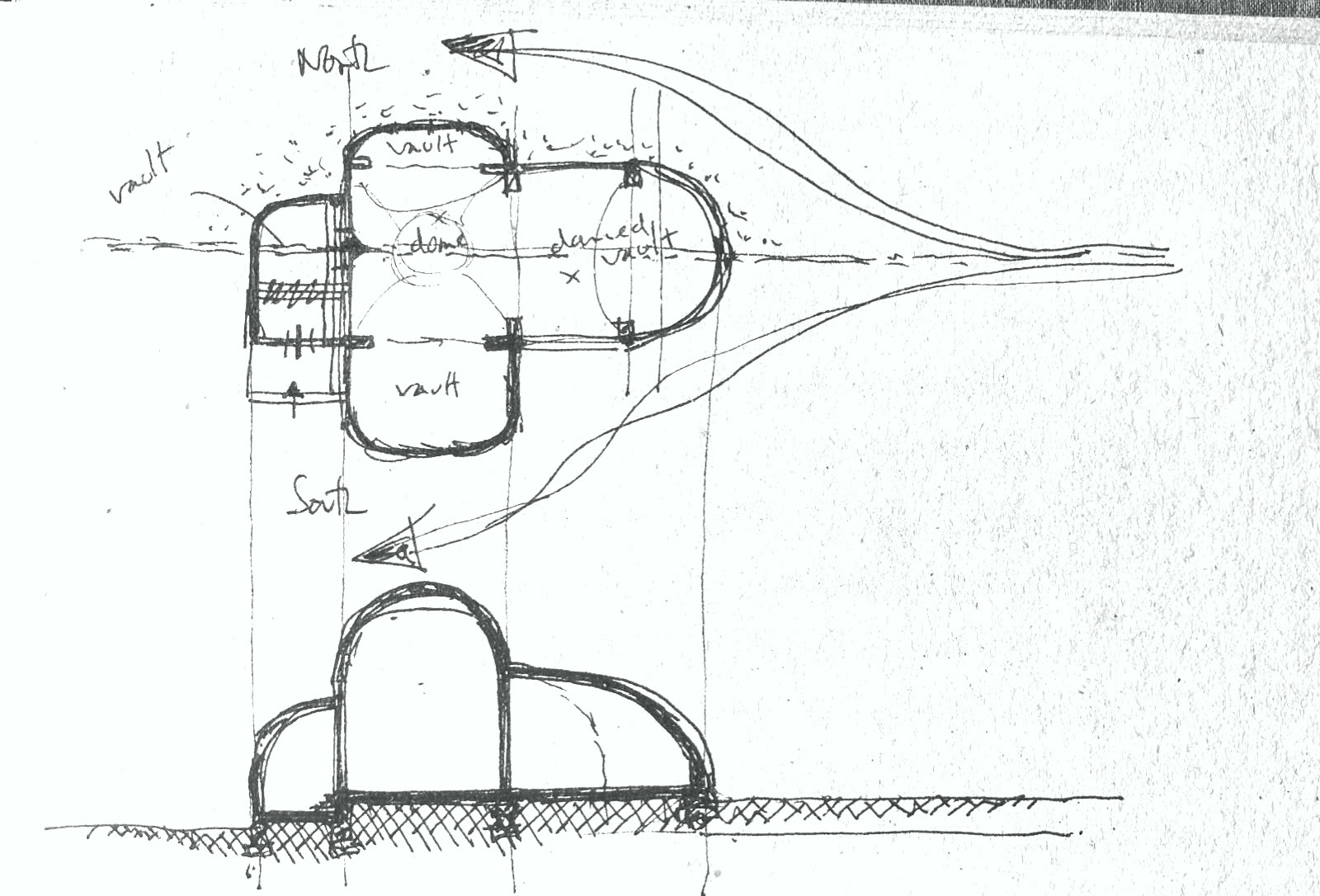
金剛亥母殿不是為了增加一個地標。它來自直貢澈贊法王對瑪南修持方向的直接指導, 承載未來金剛亥母、拙火與那若六法的長期實修願景。
The temple is not there to add a landmark. It comes from His Holiness the Drikung Chetsang Rinpoche's guidance on Manang's practice direction, and carries the long-term Vajrayogini, Tummo and Six Yogas vision.
熱是曬進來的,不是燒出來的
The heat comes in, it is not burned
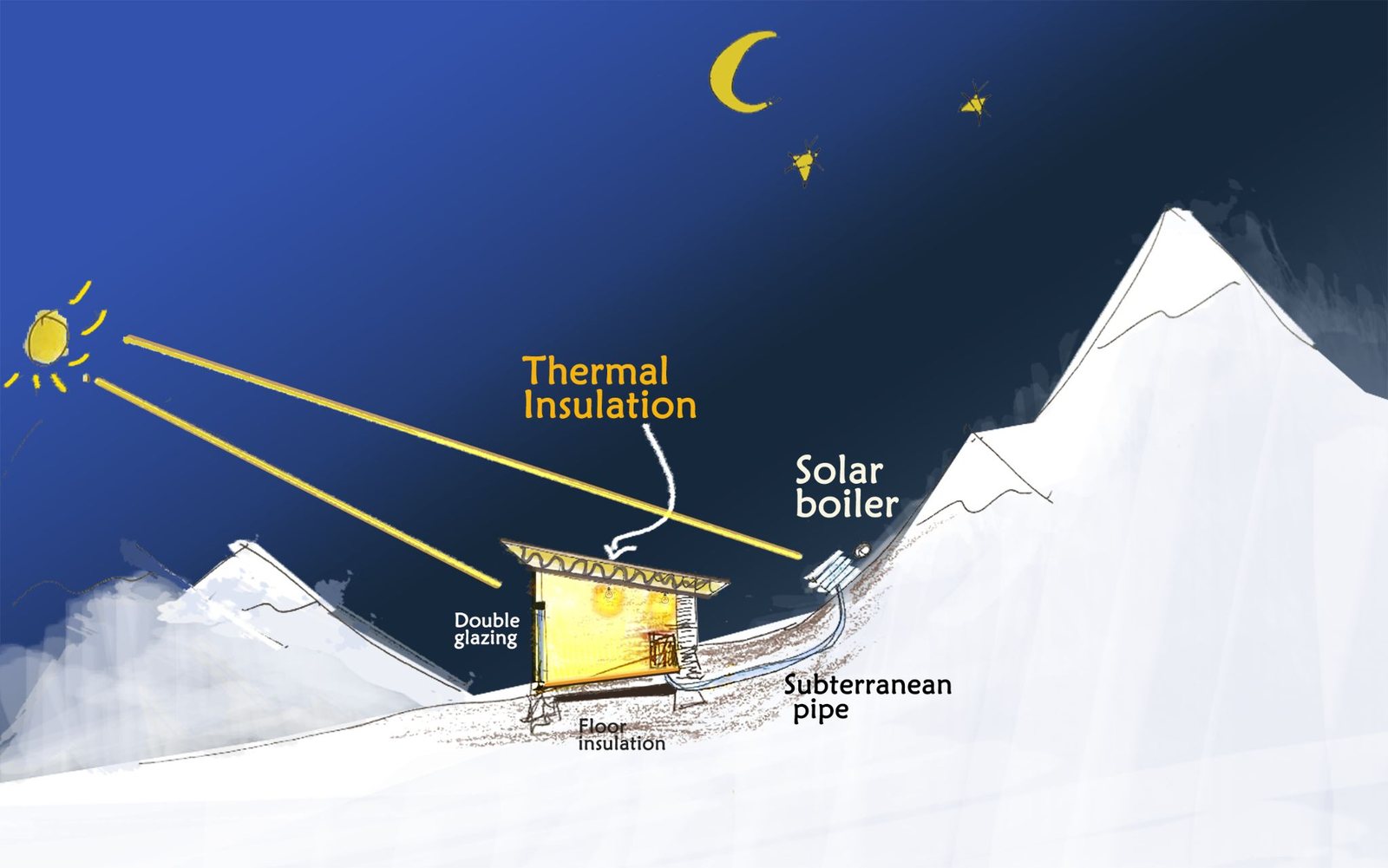
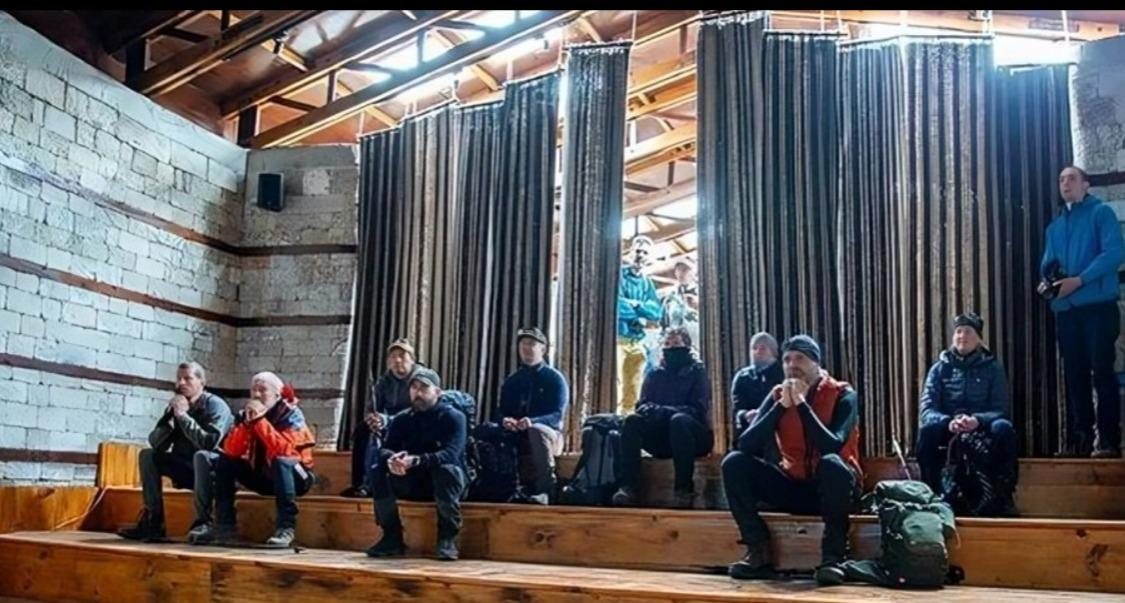
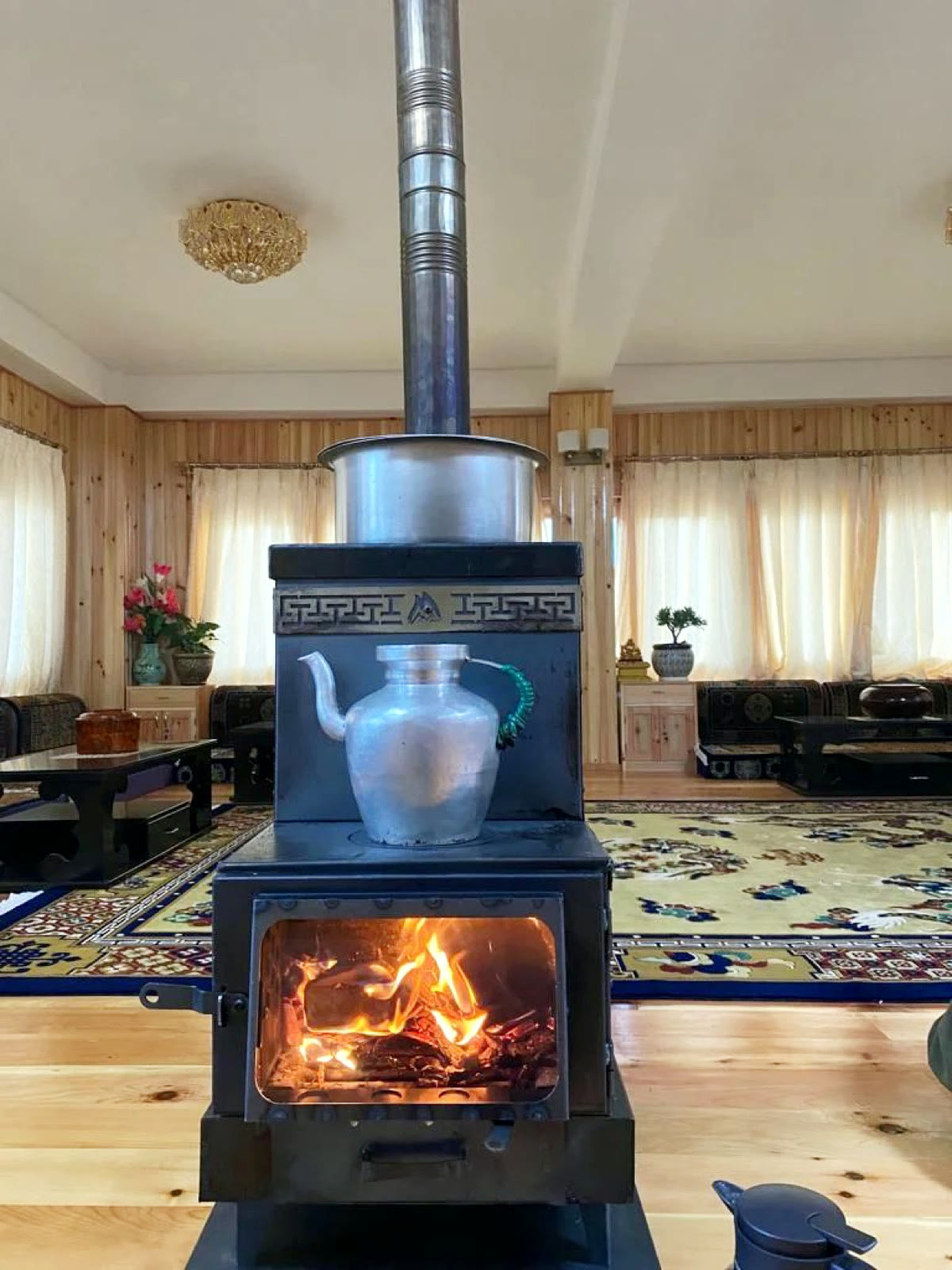
同一棟房子,夏天是敞開的長屋,冬天把簾子放下來,一座爐子就顧得住。 二十一間閉關石屋是同一套邏輯:嵌進坡裡,背後就是山,風打不到; 窗開向冬陽,厚石牆白天存熱,晚上慢慢放出來。
The same building: an open hall in summer; in winter the curtains come down and a single stove is enough to hold the room. The twenty-one cottages work the same way: set into the slope with the hill at their backs so the wind cannot reach them, windows to the winter sun, thick stone walls holding the day's heat and giving it back at night.
全靠重力,沒有抽水泵
All gravity. Nothing is pumped
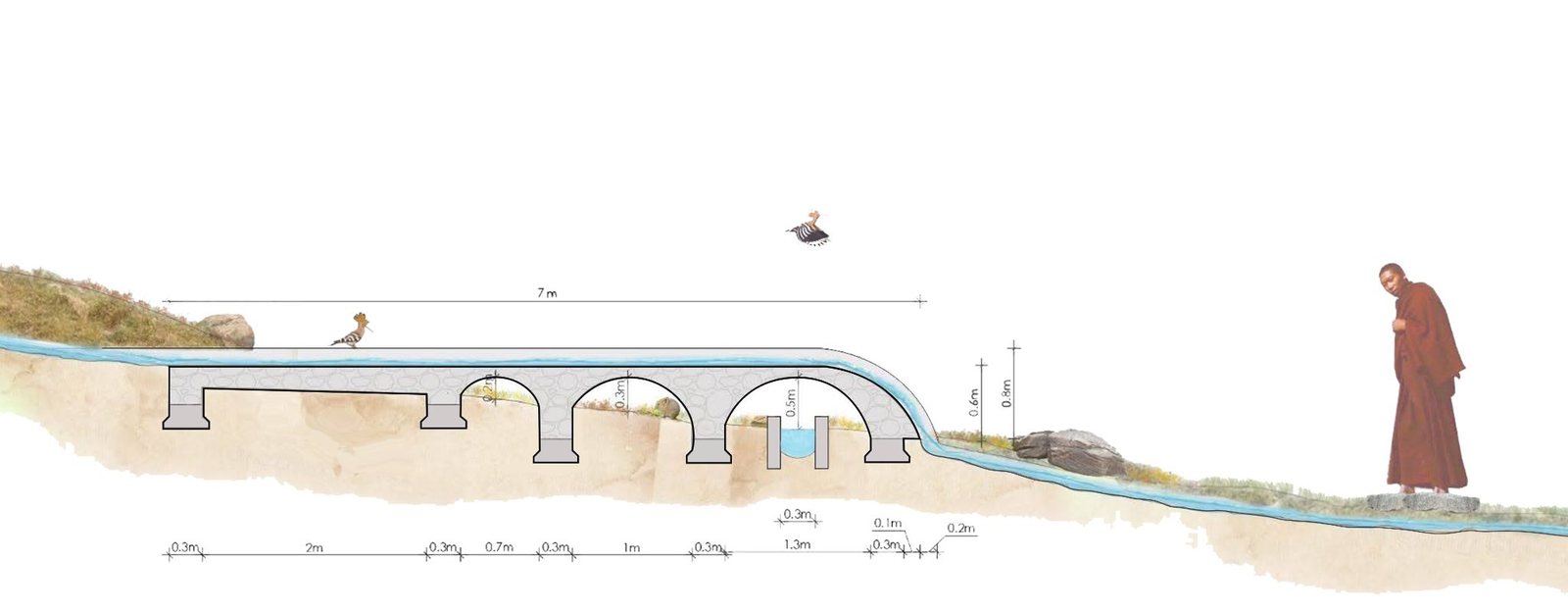
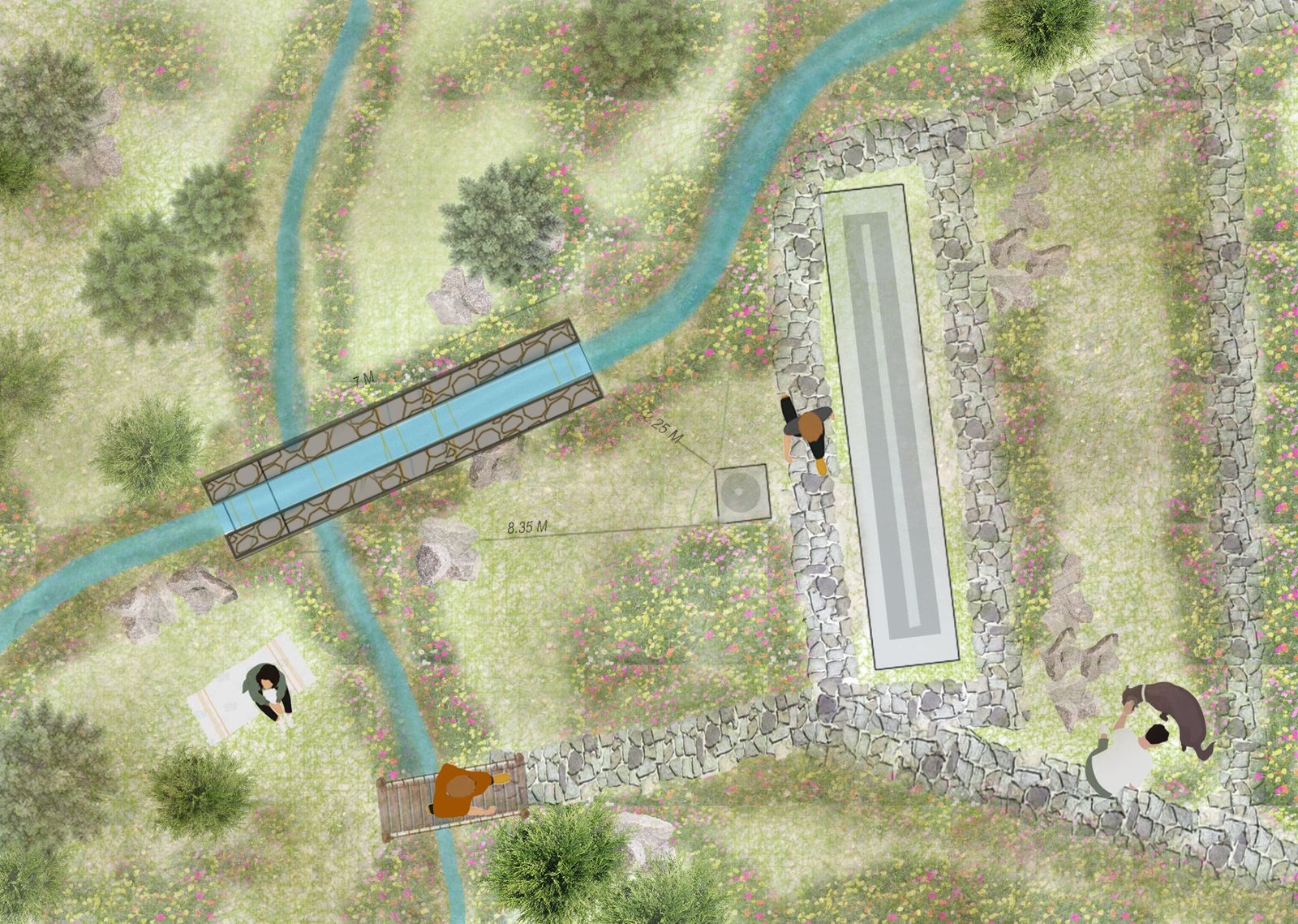
熱水另成一套:太陽能集熱器加銅管鍋爐,燃料用蕎麥殼, 村子自己種蕎麥,殼本來就要處理掉。灰水回收後再利用。
Hot water is separate: solar collectors and a copper-pipe boiler fired with buckwheat husk, which the village already has to deal with. Greywater is recovered and reused.
在地的石頭,在地的手
Local stone, local hands
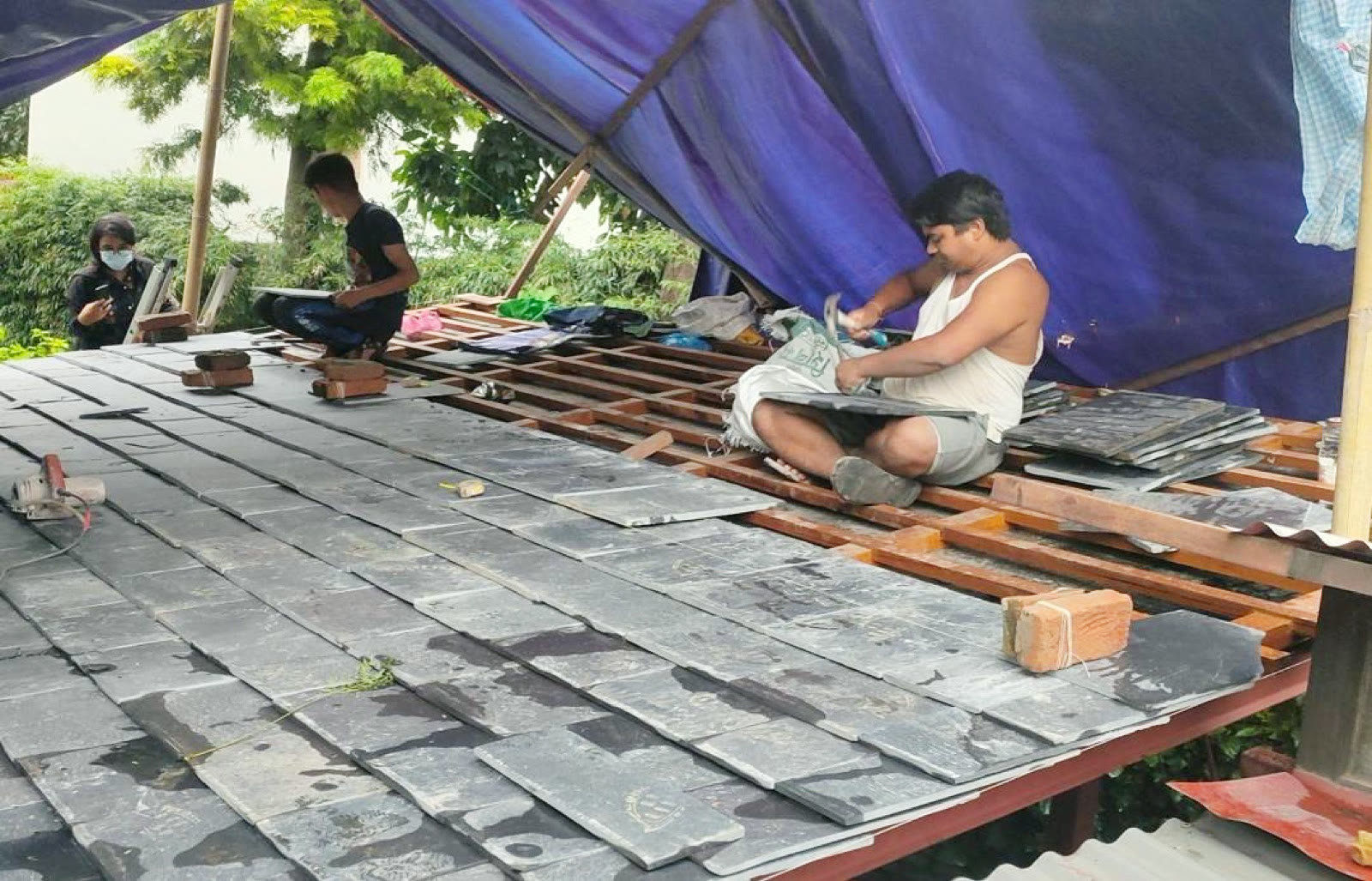
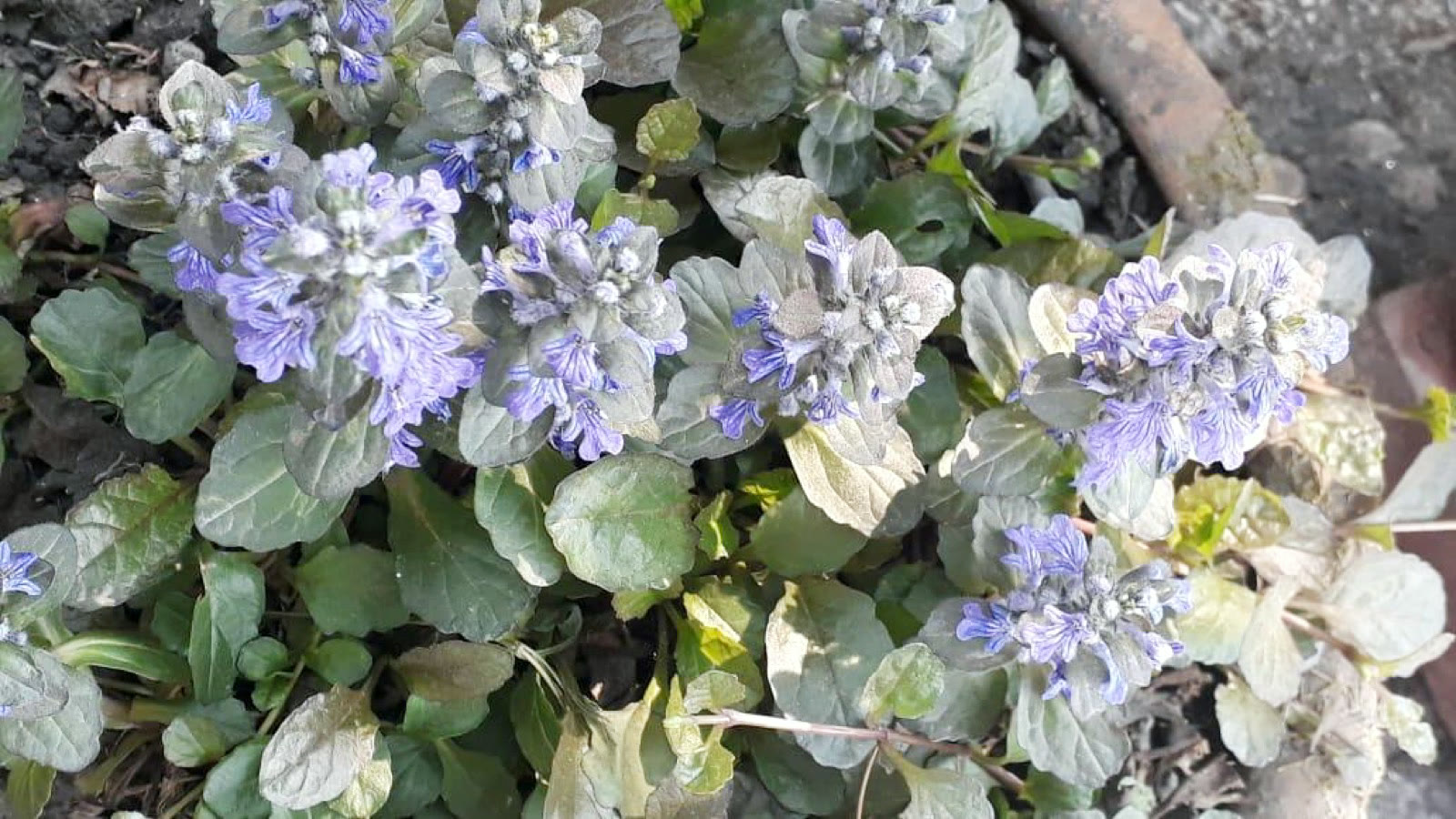
洗手台用銅與黃銅,不用陶瓷:銅可以修、可以回收,陶瓷破了就是廢棄物。 植栽只用瑪南本地的種,不從山下運上來。
Washbasins in copper and brass rather than ceramic: copper can be repaired and recycled, broken ceramic is simply waste. Planting is Manang's own, nothing trucked up from below.
SMA(Sustainable Mountain Architecture)是尼泊爾的非營利建築團隊, 2013 年由 Anne Feenstra 創立,工作室在加德滿都谷地的 Lalitpur。 Feenstra 是 2012 年巴黎「永續建築全球獎」得主。
他們長年在喜馬拉雅山區工作,案子包括印度 Gangotri 的雪豹保育研究站、 尼泊爾的 Bankatta 生態木屋,以及 Palpa 的 Heartland Academy, 也慣於使用震後回收的土構材料。瑪南的總體規劃、閉關房、Grand Café 與全區水系關係都是他們做的。 設計費已付清,不在募款範圍內。
SMA (Sustainable Mountain Architecture) is a non-profit practice in Nepal, founded in 2013 by Anne Feenstra, with its studio in Lalitpur in the Kathmandu valley. Feenstra is a laureate of the Global Award for Sustainable Architecture (Paris, 2012).
They have worked across the Himalaya for years. Their projects include the Snow Leopard Conservation Centre at Gangotri in India, the Bankatta eco cottages in Nepal, and Heartland Academy in Palpa; they habitually build with earth salvaged after the earthquake. The Manang masterplan, the retreat cottages, the Grand Café and the site-wide water strategy are all theirs. Their fees are paid; they are not part of what is being raised.
瑪南的冬季積雪使施工季集中在雪融後到入冬前。因此工程不是依照一般城市工期連續推進。 每一季都必須設定一個能安全度過下一個冬天的結構節點。
Heavy winter snow concentrates construction between the spring thaw and winter. Work therefore does not proceed on an ordinary continuous schedule. Each season needs a structural milestone capable of carrying the project safely through the next winter.
查看目前工程節點 See the current construction milestone